





European Football Odds: 7 Key Factors That Can Change Domestic Matches
European football can change the conditions surrounding domestic matches. Travel, fixture congestion, squad rotation and qualification pressure can all influence how teams perform and how European football odds are assessed.
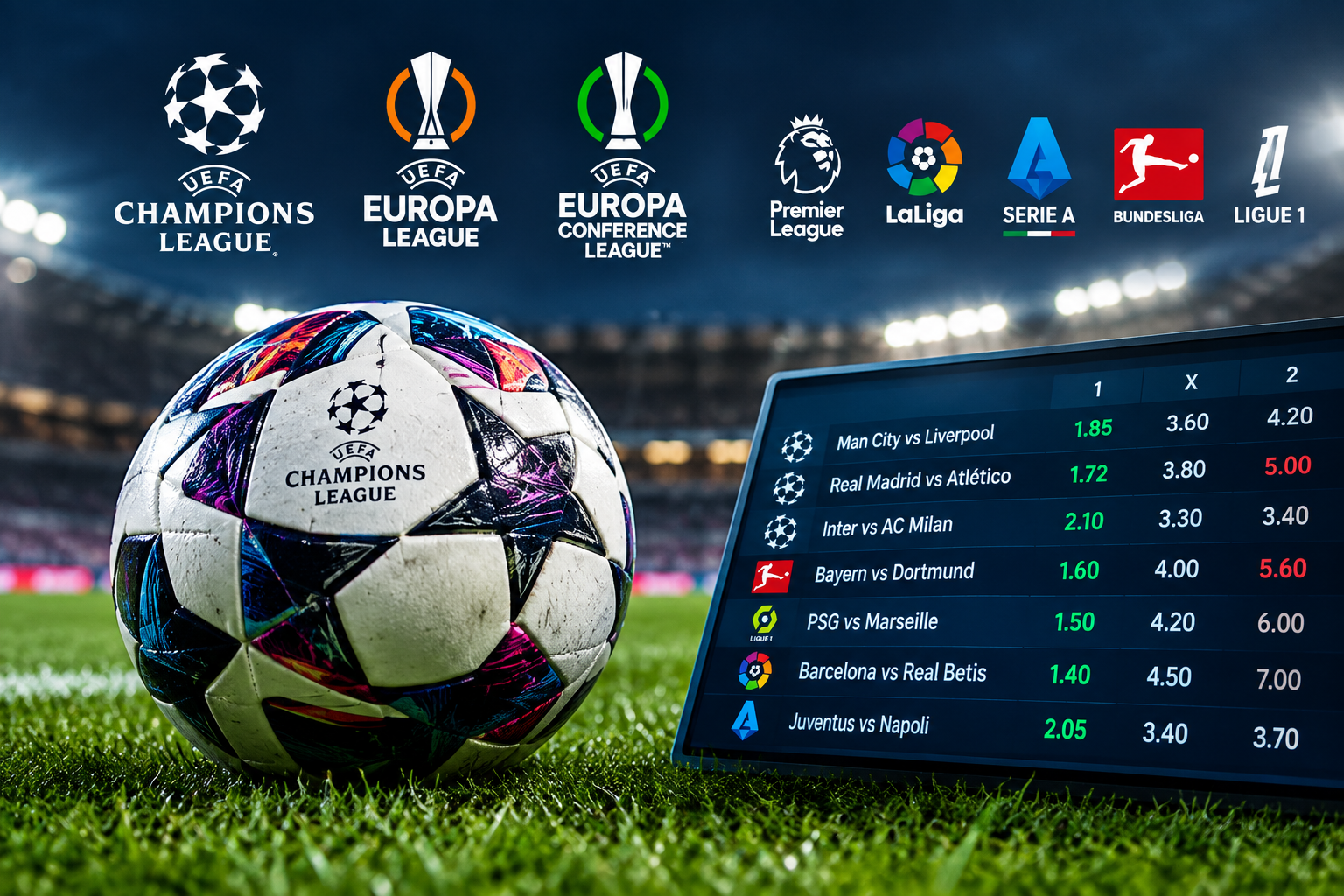
European football odds can be influenced by much more than a team's league record. European fixtures can affect player workloads, preparation time, team selection and the priorities of managers.
Clubs competing in domestic and European competitions often have to handle demanding schedules. A Champions League match on Tuesday, a Europa League game on Thursday or a Conference League fixture can change the conditions surrounding the next league match.
For anyone studying European football odds, these factors provide important context. A team may have excellent domestic statistics but still enter a weekend match after a difficult European night, while its opponent may have had several days to prepare.
Fixture Congestion
More matches can reduce recovery time and increase the importance of squad management.
Squad Rotation
Managers may rest important players when European and domestic fixtures arrive close together.
Travel Demands
Long European trips can affect preparation and recovery before a domestic match.
Qualification Pressure
Late-season European qualification battles can change the importance of individual league fixtures.
How Champions League Fixtures Affect European Football Odds
The Champions League sits at the top of the European club game, so managers often place significant importance on those fixtures. When a major continental match is close to a domestic game, selection decisions can become more complicated.
A manager might rest a regular starter, reduce a player's minutes or change the team's tactical approach. Those decisions can matter when assessing European football odds because the expected starting XI may not be the same as the lineup that has produced strong league results.
The situation can become even more important after an intense European match. Players may have less time to recover, while the domestic opponent could have enjoyed a full training week.
How Europa League Scheduling Can Influence European Football Odds
Europa League fixtures can create a particularly interesting scheduling challenge because matches are commonly played during the week before domestic football returns.
Thursday-to-Weekend Turnarounds
A club playing on Thursday may have only a short period to recover before its next league match. European travel, training schedules and player workloads can all become relevant when evaluating European football odds for the next fixture.
The impact does not automatically mean that the European side will perform poorly. Strong squads can manage busy periods effectively. However, the schedule can create uncertainty that was not visible from a basic league table.
Team News Can Become More Important
Confirmed team news can provide more information than assumptions about fatigue. If several regular starters are rested, the strength of the starting lineup may look different from previous domestic matches.
This is why European football odds can change as a weekend approaches. Early expectations may shift once lineups, injuries and rotation plans become clearer.
Conference League Matches and European Football Odds
Conference League participation creates another type of scheduling challenge. Clubs can have very different priorities depending on their league position, squad depth and ambitions in Europe.
For some teams, European progress can be a major achievement. Others may consider domestic survival, league position or cup competitions more important. Those different priorities can influence how managers distribute minutes.
Squad depth also matters. A club with several experienced substitutes may be able to rotate without a major change in performance. A thinner squad may have fewer options and could rely on the same core players across multiple competitions.
Key idea: European competition does not automatically make a domestic team weaker. Its main importance is the additional context it creates around fatigue, selection, travel and preparation.
Late-Season European Qualification and European Football Odds
The relationship between European football and domestic markets changes again near the end of a league campaign. At that stage, clubs may be fighting for Champions League, Europa League or Conference League places.
A single result can affect several teams at once. A victory for one qualification contender can increase pressure on clubs competing for the same positions, while dropped points can create new opportunities for rivals.
Remaining Fixtures Become More Important
When only a few matches remain, there are fewer opportunities for a team to recover lost points. The difficulty of upcoming fixtures, home and away records and results involving direct rivals can therefore become increasingly important.
This can create larger changes in expectations from one matchday to the next. A club that appeared comfortably positioned one weekend may suddenly face significant pressure after a rival wins.
Motivation Can Change During the Run-In
Motivation is difficult to measure from statistics alone. A team with little left to play for may approach a match differently from a club needing points to secure European qualification.
That does not guarantee a particular result. It simply means that the competitive situation should be considered alongside form, injuries, home advantage and other football information.
How European Competition Influences European Football Odds
European competition adds another layer to the analysis of domestic matches. Champions League commitments can influence rotation, Europa League scheduling can reduce recovery time, and Conference League fixtures can test squad depth.
These factors should not be viewed in isolation. A team with a deep squad may handle a busy schedule comfortably, while another club could struggle with repeated midweek matches.
When looking at European football odds, the most useful approach is therefore to consider European fixtures as part of the wider match context rather than treating them as automatic indicators of a team's next result.
7 Things to Check Before Assessing European Football Odds
Before forming an opinion about a domestic match involving a club playing in Europe, consider several factors together. No single statistic can explain every change in football odds.
1. Recent European Fixtures
Check whether the team has played one or more European matches recently and how demanding those games were.
2. Recovery Time
The number of days between matches can provide useful context when assessing player workload and preparation.
3. Expected Lineup
Possible rotation can affect the strength of a starting XI. Confirmed team news is especially useful close to kick-off.
4. Injuries and Suspensions
Missing players can change the balance of a team, particularly when European fixtures already place pressure on squad depth.
5. Squad Depth
Strong substitutes can help clubs manage congested schedules, while smaller squads may have fewer options.
6. Home and Away Performance
A team's domestic home and away record can provide additional context instead of relying only on its European results.
7. European Qualification Pressure
Late in the season, the race for European places can change the importance of individual domestic matches.
European Football Odds: Final Takeaway
European football can influence domestic football odds through fixture congestion, player rotation, travel, squad depth and qualification pressure.
The Champions League, Europa League and Conference League each create different scheduling situations. At the same time, late-season qualification races can change the importance of domestic fixtures across an entire league table.
For better football analysis, look beyond a club's recent results. Check the European schedule, likely rotation, recovery time, injuries, squad depth and the team's current position before forming an opinion about a domestic match.
Frequently Asked Questions About European Football Odds
Follow the Bigger Football Picture
Match form is only one part of football analysis. Follow BALL1TH for football news, match updates, statistics, predictions and analysis from Nigeria and around the world.
Explore BALL1TH