




Raphinha could see a new role under Hansi Flick at Barcelona
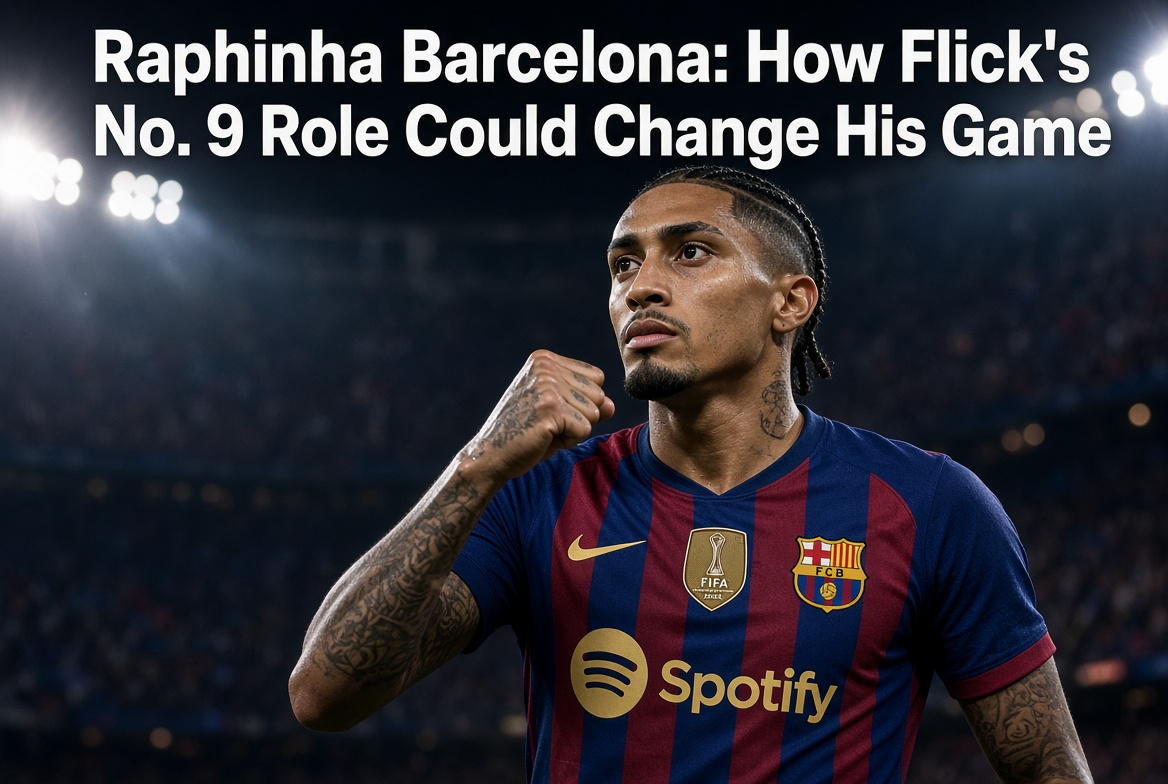
Raphinha Barcelona: How Flick’s No. 9 Role Could Change His Game
Rather than turning Raphinha into a traditional No. 9, Flick is giving him freedom to move between the lines, attack the penalty area and create space for Barcelona’s other forwards.
That tactical adjustment could give Barcelona another solution in attack while allowing Raphinha to use his finishing, movement and pressing ability closer to goal.
Raphinha Barcelona: Why Flick Is Using Him Centrally
Raphinha has spent much of his Barcelona career operating from wide positions.
His familiar pattern has been to receive the ball on the flank, cut inside onto his stronger left foot and either shoot or create an opportunity for a teammate.
The emergence of Lamine Yamal has changed the balance of Barcelona’s attack.
With Yamal capable of occupying the right side, Flick has more freedom to move Raphinha around the front line.
The result is a system in which Raphinha does not have to remain attached to one position.
He can start centrally, move towards a channel, drop into midfield and then attack the box when the opportunity appears.
A Different Type of No. 9
Raphinha does not offer the same profile as a traditional target striker.
He is not primarily a player who waits between two centre-backs for crosses. Instead, his strengths are based on movement, pressing, acceleration, combination play and finishing.
That makes him particularly useful in a Barcelona system that wants to keep the opposition defensive line under constant pressure.
How Raphinha Creates Space for Barcelona
One of the biggest advantages of the Raphinha Barcelona experiment is the space his movement can create.
When Raphinha drops towards midfield, an opposing centre-back has a difficult decision.
If the defender follows him, space can appear behind the defensive line. If the defender stays in position, Raphinha can receive between the lines and turn towards goal.
Barcelona’s wide players can then attack the spaces created by that movement.
Lamine Yamal can stay wide before moving inside, while another forward can attack the opposite channel.
The midfielders also have opportunities to make late runs into the penalty area.
Raphinha’s Finishing Becomes More Important
Moving closer to goal also changes how Raphinha can use his strongest qualities.
As a winger, he often has to beat a full-back before reaching a dangerous position.
As a central forward, he can receive the ball closer to the penalty area.
That gives him fewer defensive players to beat before attempting a shot or final pass.
His left foot remains one of his biggest weapons.
From central positions, he can shoot across goal, combine with teammates or attack spaces around the centre-backs.
Hansi Flick’s Pressing System Suits Raphinha
Another reason the experiment makes sense is Flick’s pressing philosophy.
Barcelona want their forwards to contribute immediately when possession is lost.
A central Raphinha can pressure centre-backs and goalkeepers while using his speed to close passing lanes.
The objective is not always to win the ball immediately. Sometimes the first pressing action forces the opponent into a rushed pass, allowing Barcelona’s midfielders or wide attackers to recover possession further forward.
Raphinha’s work rate makes him suitable for this responsibility.
Raphinha Barcelona Role Compared With His Previous Position
| Area | Wide Raphinha | Central Raphinha |
|---|---|---|
| Starting position | Wing | Central areas |
| Main objective | Create and cut inside | Create, combine and finish |
| Defensive role | Press full-back | Press centre-backs |
| Ball reception | Often wider | Closer to penalty area |
| Movement | Inside from wing | Between lines and channels |
| Scoring opportunities | Created through carries | Created through positioning |
Could Raphinha Become Barcelona’s Long-Term No. 9?
The answer depends on how Barcelona’s attack develops.
Raphinha can provide qualities that a conventional striker may not. He can press aggressively, rotate positions, combine with midfielders and attack space behind defenders.
However, there are also limitations.
Against a deep defensive block, Barcelona may need a forward capable of playing with his back to goal and competing physically with centre-backs.
Raphinha is not necessarily designed to provide that profile.
That means Barcelona could continue using different attacking solutions depending on the opponent.
Raphinha Barcelona and Lamine Yamal’s Role
The Raphinha Barcelona tactical change cannot be considered separately from Lamine Yamal.
Yamal’s ability to operate from the right gives Barcelona the flexibility to move Raphinha into central areas.
The young attacker can provide width, attack one-on-one situations and move inside when the opportunity appears.
That combination can make Barcelona difficult to defend because opponents cannot simply focus on one attacker.
If a defender follows Raphinha centrally, Yamal can exploit the resulting space.
If the defence remains narrow, Yamal can receive wider and attack from the flank.
What Raphinha Can Learn From Other Forwards
Raphinha’s new role also represents a potential evolution in his career.
Players who began their careers as wide attackers have sometimes moved closer to goal as their games developed.
The important lesson is not that every winger should become a striker. Instead, elite attackers can adapt their positioning as their strengths and team requirements change.
For Raphinha, developing better movement inside the penalty area could increase his effectiveness over the long term.
The Biggest Challenge for Raphinha
The biggest question is whether Raphinha can consistently influence matches when opponents defend deep.
A traditional No. 9 can occupy centre-backs and provide a clear target for crosses.
Raphinha’s game is more dynamic. He needs space to move and combine.
If an opponent keeps its defensive lines extremely compact, that space becomes harder to find.
Barcelona will therefore need movement from the entire attacking unit.
Why the Experiment Could Benefit Barcelona
The biggest advantage of the experiment is tactical flexibility.
Barcelona no longer have to rely on one fixed striker profile.
Raphinha can lead the line while still playing in a way that reflects his natural attacking qualities.
His pressing, movement and ability to finish can all become part of the same system.
That can also create more opportunities for teammates.
Raphinha Barcelona: Key Points
- Raphinha is being used in more central attacking positions.
- His movement allows him to operate as a mobile No. 9.
- Lamine Yamal’s presence gives Barcelona greater attacking flexibility.
- Flick’s pressing system suits Raphinha’s work rate.
- His left-footed finishing can become more dangerous closer to goal.
- The system may struggle against very deep defensive blocks.
- Barcelona can adjust the role depending on the opponent.
Frequently Asked Questions
Why is Raphinha playing as a No. 9 for Barcelona?
Hansi Flick can use Raphinha centrally to take advantage of his movement, pressing, combination play and finishing while creating space for Barcelona’s wide attackers.
Is Raphinha a traditional striker?
No. His role is more flexible. He can drop between the lines, move into the channels and attack the penalty area rather than remaining permanently between the centre-backs.
How does Lamine Yamal help Raphinha?
Yamal’s ability to provide width and attack from the right gives Raphinha more freedom to operate centrally.
What are Raphinha’s biggest strengths as a No. 9?
His movement, pressing, acceleration, left-footed finishing and ability to combine with teammates are particularly useful in the central role.
Could Raphinha remain Barcelona’s No. 9?
That will depend on Flick’s tactical plans, Barcelona’s squad options and how opponents respond to the system.
What is the biggest weakness of Raphinha as a striker?
Against a deep defensive block, Barcelona may sometimes need a more physical forward who can hold the ball up and compete directly with centre-backs.
Conclusion
The Raphinha Barcelona tactical experiment represents another stage in the Brazilian’s development.
Rather than asking him to become a completely different type of footballer, Hansi Flick is moving him closer to the areas where his finishing and movement can have the biggest impact.
The role also fits Barcelona’s wider attacking structure. Lamine Yamal can provide width and creativity, midfielders can attack spaces and Raphinha can move between the lines before arriving in the penalty area.
There will be difficult matches where Barcelona need a more traditional striker profile, but Raphinha’s flexibility gives Flick another tactical option.
For Ball1th readers, the key question will be whether the experiment remains effective when La Liga opponents adjust their defensive plans.
Follow Ball1th for the latest Barcelona news, La Liga updates, football analysis, transfer news and football predictions .
About the Author
